
Articles / Field notes / 23 Oct 2026 / 7 min read
Patio umbrellas from China: what to check before you order
Ordering patio umbrellas or striped canopies from China? Check the fabric weight, the stitching at stress points, the frame and the packing — and keep a sealed sample to compare bulk against.
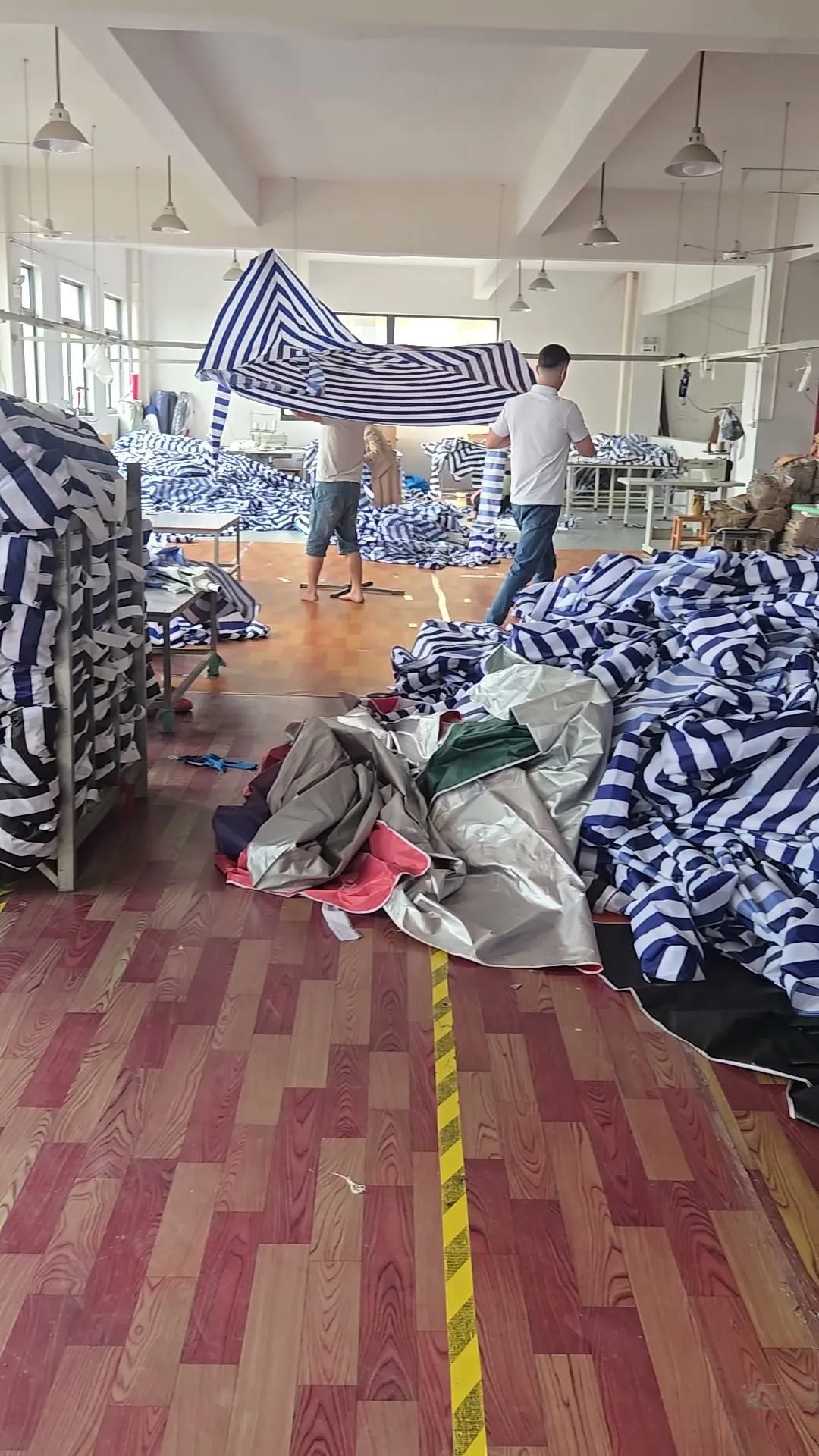
Patio umbrellas and striped shade canopies look identical in a photo and very different on a patio two summers later. The difference comes down to four things: fabric, stitching, frame and packing. None of them can be judged from a listing image, and all of them are settled before the container ships.
In October we spent a day at an outdoor shade factory in Zhejiang, looking at how umbrellas and striped canopies are made and stored. Here is what we looked at, and what you should ask for before you pay a deposit.
Why shade products are usually a traditional-trade order
Most outdoor shade products are a poor fit for one-piece dropshipping, and it helps to know why before you build a store around them.
- The parcel is oversized. A market umbrella packs into a long carton, and couriers price that by volume rather than weight.
- Long cartons get handled hard. Ribs, cranks and tilt joints break first, and replacements eat the margin on the whole order.
- After-sales is real. Bases, assembly, missing hardware and canopy replacement are normal questions that a single consumer will ask.
- The natural buyer is a business. Hotels, resorts, beach clubs, restaurants, garden centres and event rental companies buy in multiples and reorder.
That points to traditional trade: order a batch, ship it by sea in a shared container, sell from your own stock. Small folding umbrellas, replacement canopies and spare parts are light enough to post one at a time, so a mixed model works — bulk for the main line, single-unit shipping for the small items.
Fabric: the part that fails first
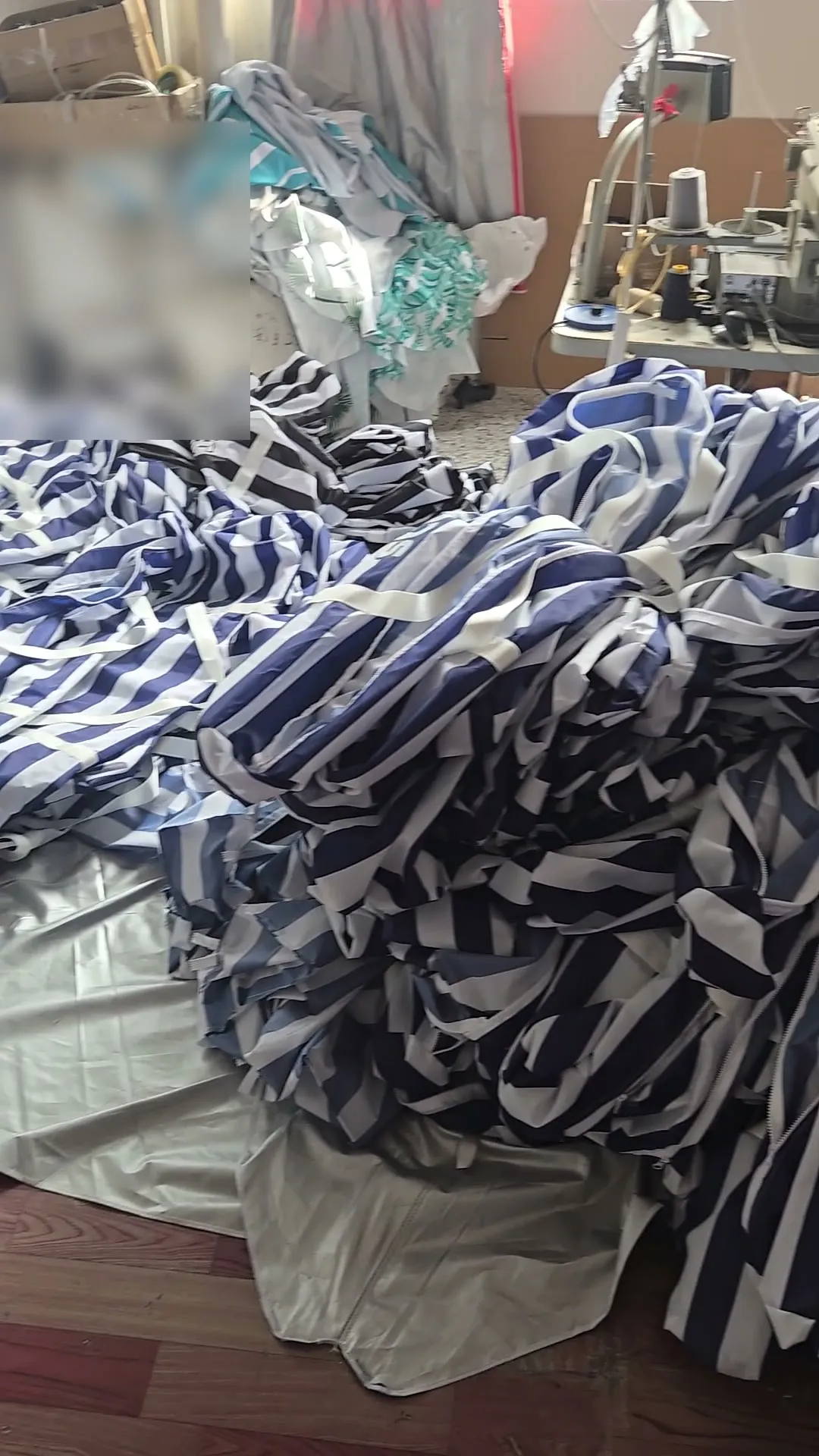
Fabric takes the sun, the rain and the wind, and it is the easiest place for a supplier to downgrade quietly between sample and bulk. In the workshop it is cut on a cutting table and sewn into panels.
- Type and weight. Polyester is the workhorse; acrylic and olefin appear in higher-grade ranges. Ask for grams per square metre and for the roll label that proves it.
- Solution-dyed or piece-dyed. Solution-dyed yarn holds colour far better under UV. Piece-dyed looks the same in the warehouse and fades sooner.
- Coating. A PU or PA back coating improves water repellency and colour retention. Ask what it is and whether it is on one side or both.
- Colour reference. Match a physical swatch, not a screen. On stripes, the width and sequence are part of the spec.
- Sample versus bulk. The approved sample should come from a roll that will also feed production. If nobody can say which roll that is, assume it will differ.
A blunt question works best: 'What will this look like after two summers in strong sun?' A supplier who has thought about it talks about light-fastness and coating. One who has not talks about price.
Stitching, seams and test assembly
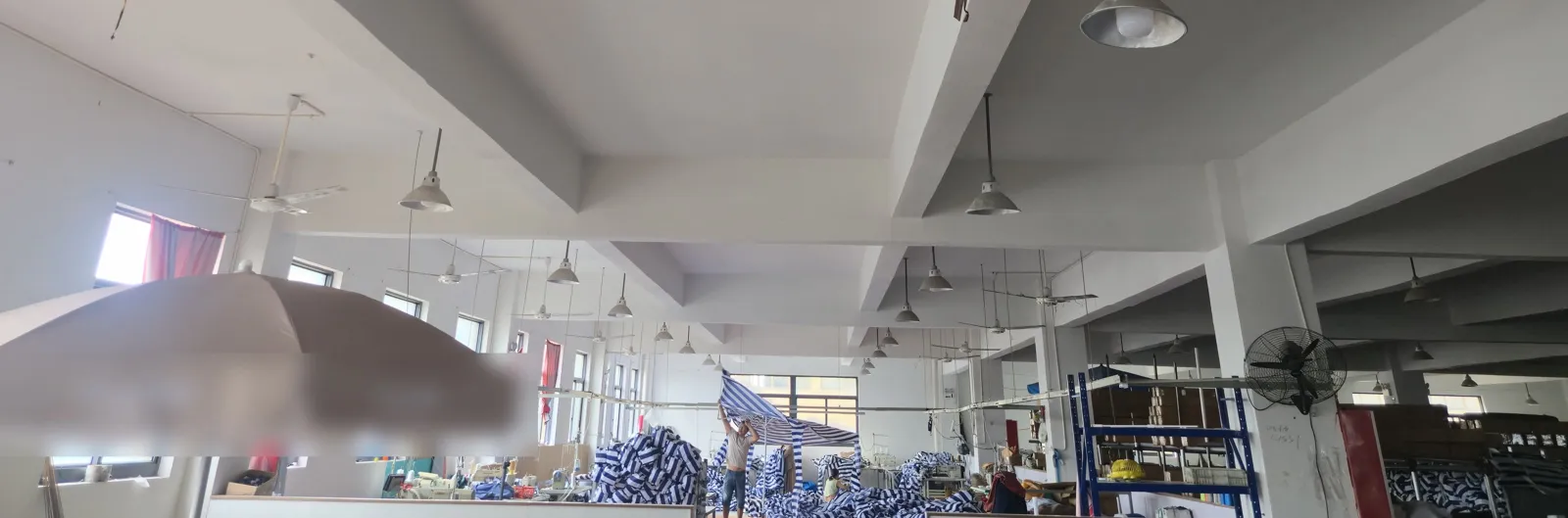
In the sewing workshop, panels are cut, bound and sewn, and the canopy is test-assembled on the floor before packing. That test assembly catches most problems, and it is the step a buyer never sees.
- Stitch density and thread. Loose, long stitches pull open under wind load. Ask for stitch count and whether the thread is UV-stable.
- Double stitching at stress points. Corners, rib pockets and vents should be reinforced, usually with bartacks. Single stitching there is a warning sign.
- Pattern matching. On a striped canopy the stripes should line up across panels. If they step at the seams in the sample, they will in bulk.
- Fit. The canopy should sit tight without puckering or sagging between ribs. A test assembly shows this; a folded sample does not.
- Small parts. Valance, binding tape, vent, grommets and the cover zipper are cheap to do properly and easy to skip.
Frames, poles and hardware
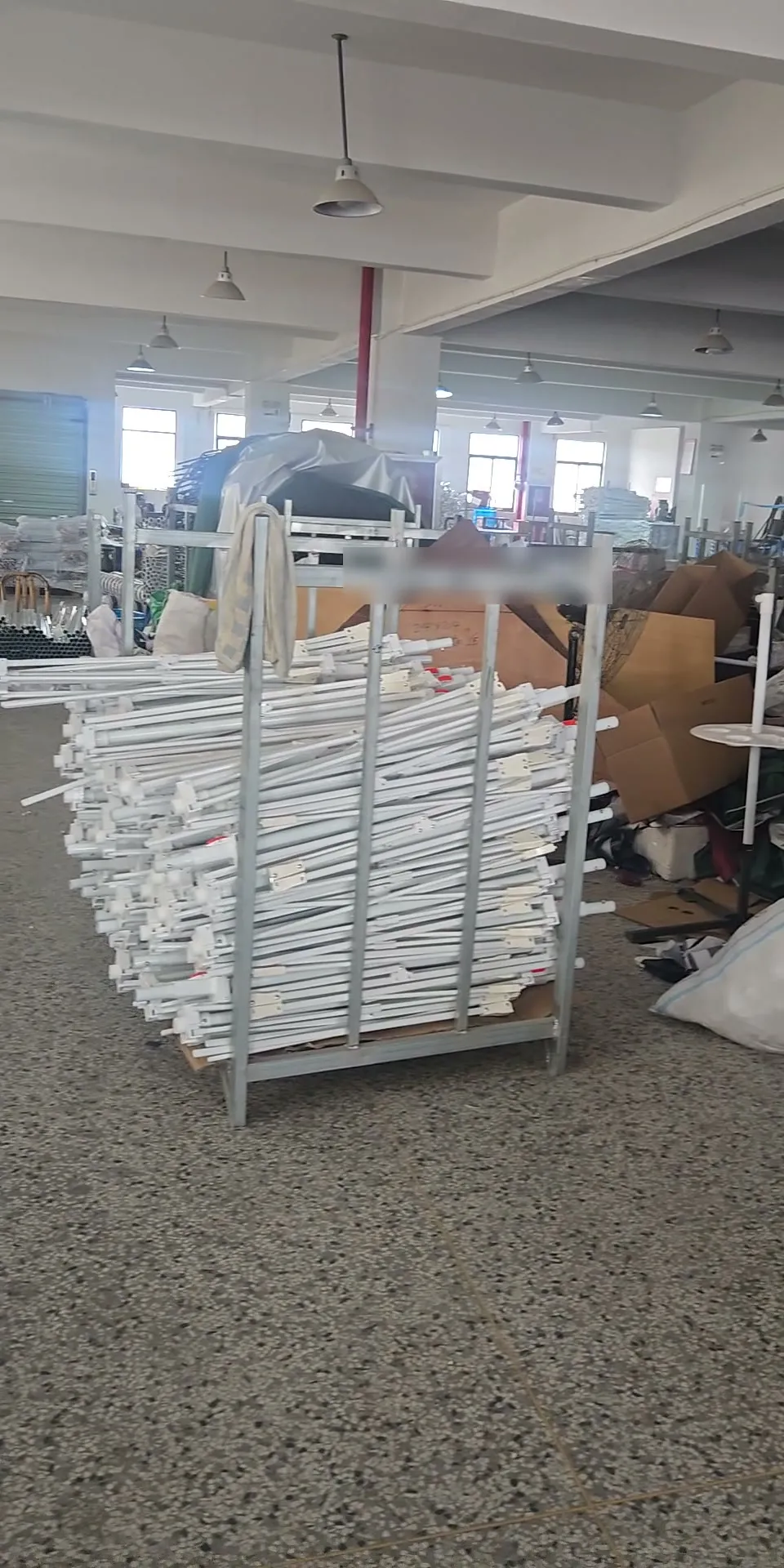
Frames are where weight and cost are decided. In the warehouse, finished poles sit strapped into bundles on pallets, and frames wait in carts to be matched with canopies.
- Aluminium or steel. Aluminium resists rust; steel is stronger for the money but needs good powder coating. Know which one you are buying.
- Wall thickness. Ask for the wall thickness of pole and ribs. A frame that feels light in the hand is light for a reason.
- Coating. Powder coat should be even, with no thin patches at the joints. A scratch test on a sample says more than a description.
- Ribs and joints. Rib count, rib material and the quality of hub and joints decide how the umbrella behaves in wind.
- Mechanism and spares. Crank, lift, tilt and locking pin are what customers touch daily and what breaks first. Ask whether ribs, cranks and canopies can be supplied later.
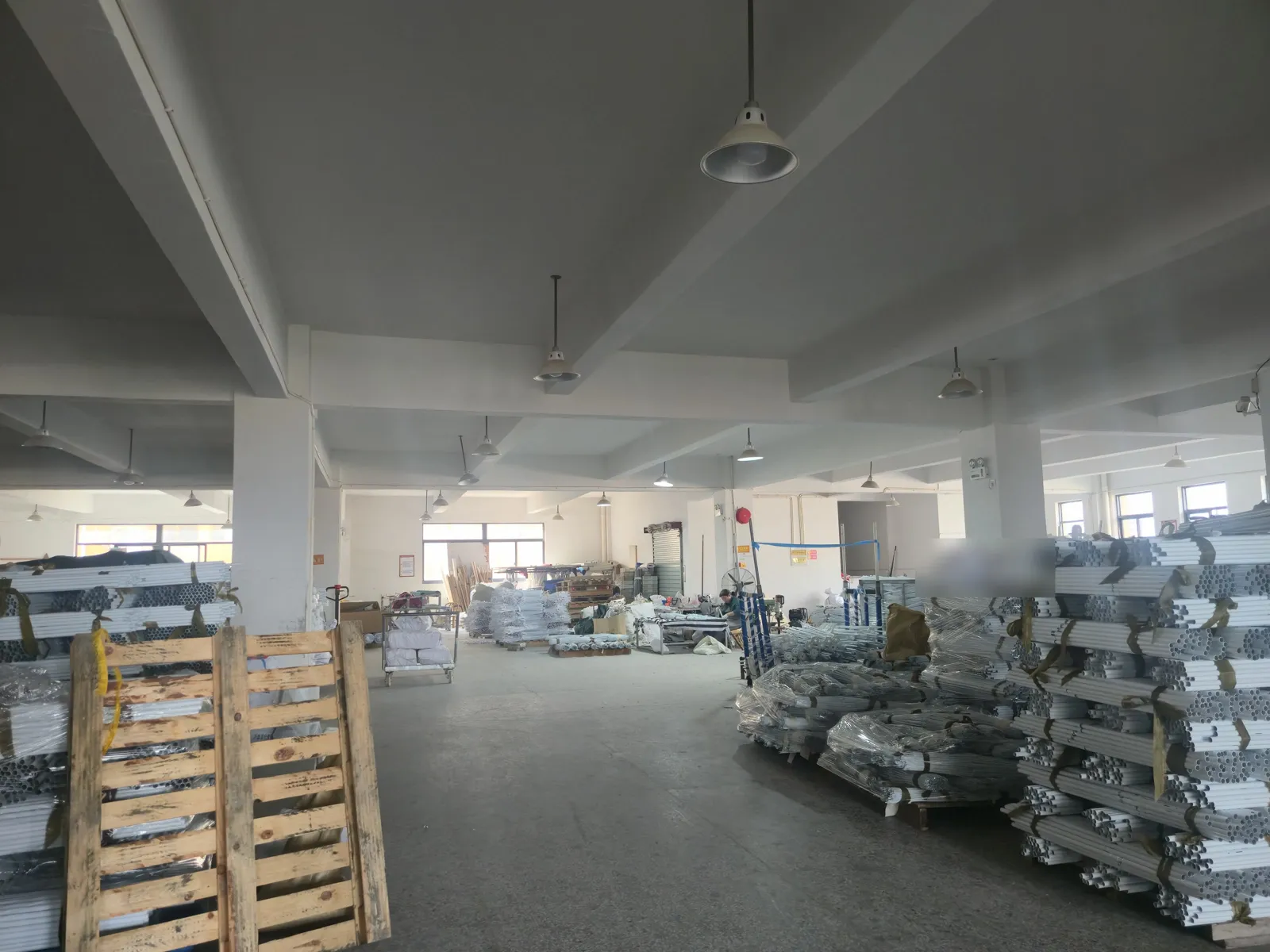
Packing, stock and the sample-to-bulk gap
- How it is packed. Canopy folded and wrapped, pole and hardware bagged with an instruction sheet, all inside a carton strong enough for a shared container.
- Carton data. Ask for carton size, units per carton, total cartons and total weight — for the packing method you are actually buying. You need these before you can plan freight.
- Stock or production. Ask whether goods are in stock or made after deposit, and which steps are subcontracted: fabric, printing, powder coating. Subcontracted steps are where lead times slip.
- The golden sample. Approve one unit, sign and date the spec sheet, seal the sample and keep it. Bulk is then checked against it before shipment, not against memory.
This is the gap that catches first-time buyers: the sample is a one-off, bulk is what the line produces on a normal day. A written spec plus a sealed reference is what keeps the two the same. More on that in our guide to samples and MOQ pressure.
Which markets buy shade, and what to confirm before ordering
Demand follows sun and outdoor seating. The Gulf, the Mediterranean, Southeast Asia, Australia, the southern United States and Latin America all have long outdoor seasons and a hospitality sector that replaces shade regularly. In temperate markets the season is short, so timing matters more than range: garden retailers want stock before spring, not in July. Event and wedding rental is a steady niche because canopies are handled hard.
Before you order, confirm in writing:
- Fabric type, weight, coating and colour reference, with the swatch number.
- Frame material, wall thickness, rib count, and whether a base is included.
- Canopy size, shape, valance and vent details.
- Printing method if the canopy carries a logo.
- Spare parts included now and available later.
- Carton dimensions, units per carton and total volume.
- Lead time from deposit and the milestones you will be told about.
- Who inspects before shipment, against which spec.
Two of these decide whether the order works: total volume (freight) and the fabric spec (returns). If you want a second pair of eyes before the goods leave, see our pre-shipment inspection guide and the factory audit checklist.
Quick answers
Can I start with a small trial order?
Usually yes, but small for shade means a few cartons rather than one unit, and freight decides whether it is worth it. Use the trial to check fabric, stitching and packing, and keep the spec identical to what you plan to reorder.
How do I judge fabric without a lab test?
Ask for the roll label and the weight in grams per square metre, compare the sample against a named reference, and ask what the coating is. Then keep the approved sample sealed and compare bulk against it.
What goes wrong most often on a first shade order?
Fabric arrives thinner or paler than the sample, stripes do not line up at the seams, and the frame is lighter than expected. All three are visible before shipment if someone compares the goods against a written spec.
What to do next
If you have a shade product in mind — patio umbrellas, striped canopies, or something adjacent like a solar torch umbrella — send us the product with a photo, the size and the market you sell into. We will come back with two or three factory options and a real comparison, so you can see the fabric, frame and packing differences before you commit. More about how that works in our sourcing service.